

WOODWORK AT AEROVISTO
Varnishing & Revarnishing
The finish decides how wood looks, lasts, and flies.
Veneer gives a cabin its face; the finish gives that face its depth — and its airworthiness. Varnishing is the craft of building that protective surface, layer by layer. Revarnishing is the craft of renewing it — without replacing the wood beneath.
Built to Perform at Altitude
Cruise altitude is hard on wood. The air in a business-jet cabin is drier than desert air — relative humidity drops below ten percent in flight, at times to three or four. Wood responds the way it always has: it moves. A finish that cannot move with it will crack, dull, and fail.
That is the quiet reason aviation wood finishes are engineered systems rather than furniture lacquer: they flex with the wood, resist UV that is two to three times stronger at altitude, and pass the same fire testing as every certified material on board. The result looks like beauty. It behaves like engineering.
Polyurethane Systems
AeroVisto works exclusively with modified polyurethane systems for cabin wood surfaces. The reasons are practical: durability over years of service, flexibility that follows the movement of the wood, and a full range of sheens from matte to high gloss. In aviation, the finish is part of the certified material build-up — chosen, applied, and tested as one system with the veneer it protects.
The Finish Spectrum: Matte to Piano Black
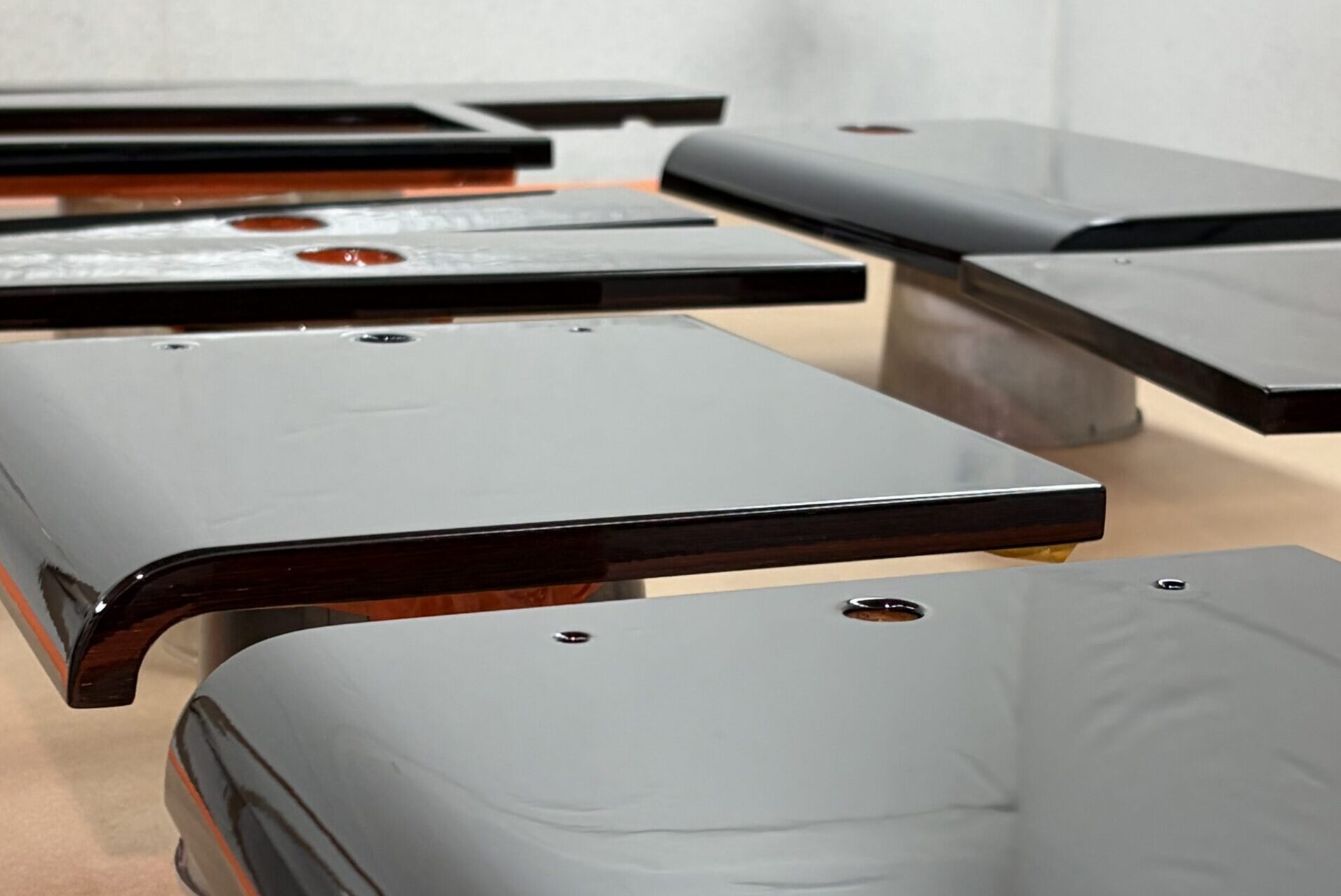
There is no ranking of finishes — only a palette. Matte hides fingerprints and forgives daily use. Silk matte and silk gloss bring out the character of the grain with a warm, quiet glow. High gloss — up to full piano black, built from eight to twelve or more hand-polished layers — rewards care with a depth the other sheens do not attempt.
Which one is right? That depends less on taste than on a question the AeroVisto team asks early: how will your aircraft fly? Cabins flown privately tend toward matte and tactile surfaces — calm, residential, close to the wood. Cabins that work hard, with charter guests every week, often choose gloss for a practical reason: scratches can be polished out. Neither answer is better. One of them is yours.
Sheen has also become a design direction in its own right. Matte and open-pore finishes are a strong current trend, valued for their natural, tactile character — while high gloss remains the classic statement. Both can live in one cabin: matte fields for daily-use zones, gloss for the surfaces meant to stand out. Physical samples make the decision tangible — sheen is chosen by hand and eye, with real wood on the table.
The Varnishing Process
A varnished surface is built, layer by layer. Each coat of the specialized varnish is applied, sanded, and reapplied — and each layer is dried thoroughly, which gives the finish its flame resistance and its flexibility.
Every sheen in the spectrum rests on this same layered foundation. Matte, silk matte, and silk gloss differ in how the final coats are worked; high gloss takes the discipline furthest — piano black, hand-polished to a mirror. The choice of veneer behind such a surface is its own craft, covered on the Veneering page.
The same patience is found in piano making and in superyacht finishing. Aviation adds one requirement the other crafts do not know: the finish itself must pass certified fire testing as part of the installed material.
Renew or Preserve: Four Paths
Not every cabin needs new wood — and not every finish needs to start over. There are four ways to renew wood surfaces; the right one depends on the condition of what is there:
- Keep and protect. Wood and finish are sound; care and a renewed topcoat preserve them. Choose this if your cabin needs guarding more than changing.
- Tint and refresh. The veneer is intact, but the color feels dated or worn; tinting and revarnishing transform tone and luster without new wood. Choose this if you like your wood but no longer its color.
- Partially re-veneer. Selected surfaces receive new wood where the original cannot carry the new design. Choose this if the design asks more of some panels than of others.
- Fully re-veneer. A new wood picture, chosen from the full range of species and patterns. Choose this if the cabin should start over.
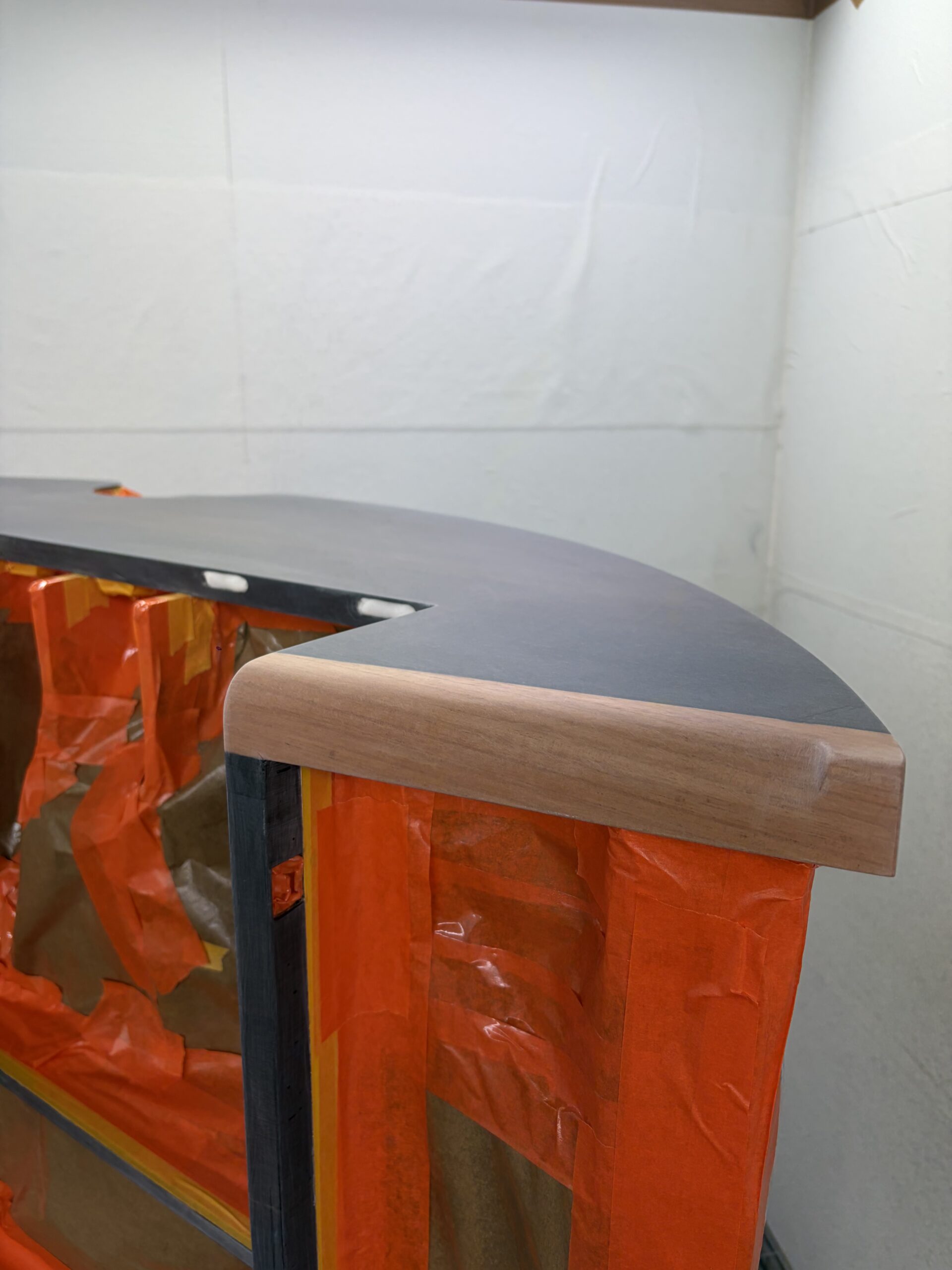
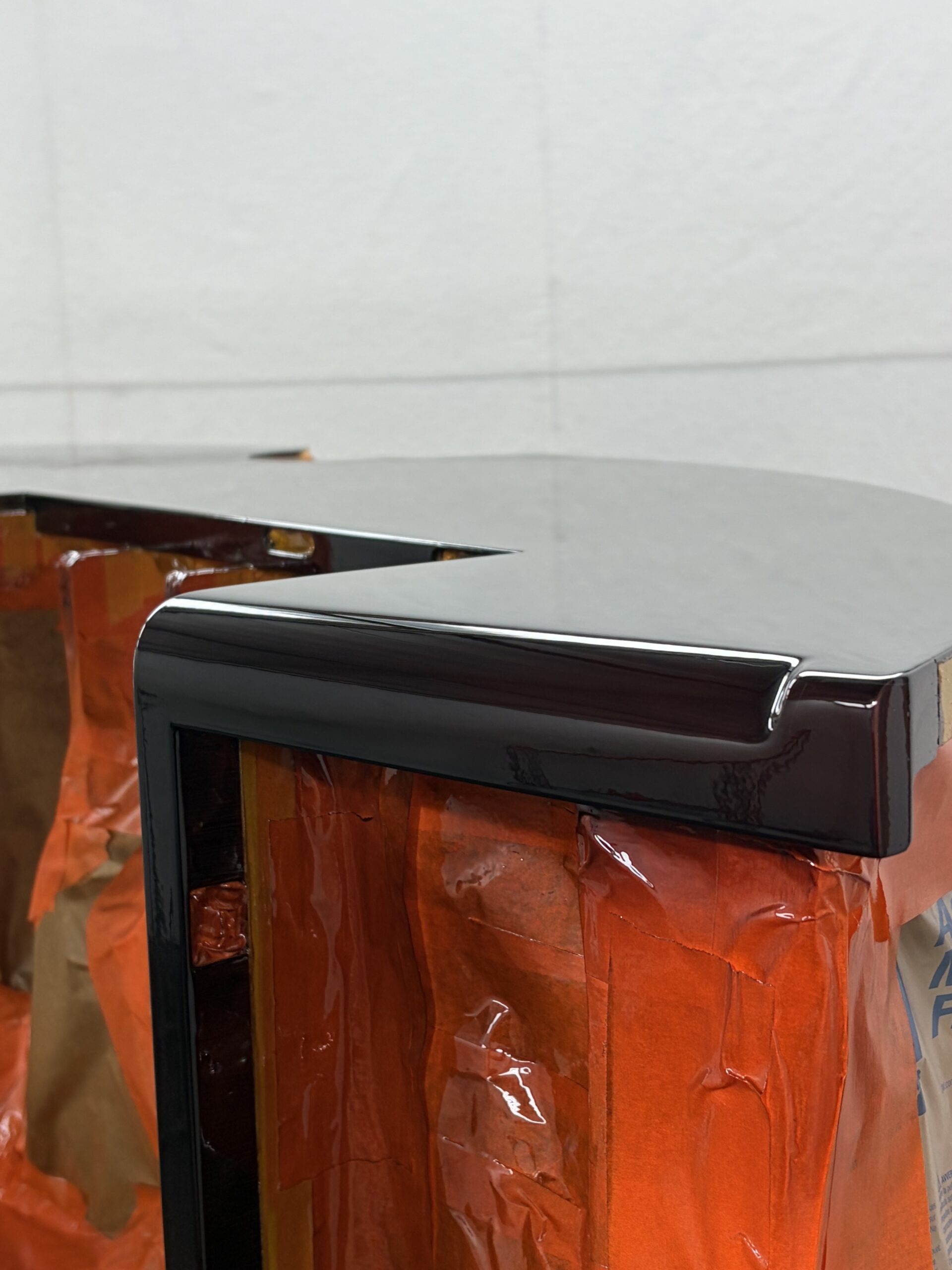
Paths one and two are finishing work. For example, on a Cessna Citation XLS, the existing wood was sanded, tinted darker, and finished in high gloss — renewal without re-veneering. Paths three and four replace the wood itself — the craft described on the Veneering page.
Revarnishing: Renewal Without New Wood
Revarnishing renews the protective finish on existing veneer: scratches, chips, cracks, and dull surfaces are worked out, and a new build-up restores depth and resilience. The wood stays — the finish ages so the veneer does not have to.
Charter cabins feel this first. High utilization leaves its traces on tables, ledges, and galley surfaces, and most of these traces live in the finish layer, where they can be repaired.
The Cabin Survey
Every renewal at AeroVisto starts with knowing what is there. AeroVisto specialists inspect the cabin on site and document the condition of every wood surface, systematically and in detail.
The result is more than a list of findings. Each surface is assessed for its own path: which ones need care, which call for tinting or revarnishing, and which need new veneer. The renewal plan that follows is aligned with your schedule and upcoming maintenance events. You decide with a complete picture in hand.
Tinting: New Color Without New Wood
When the wood is intact but the color no longer fits, tinting changes the character of a cabin without re-veneering. Three typical cases: darken — toward deeper, richer tones; match — align sun-bleached areas with the rest of the cabin; refresh — revive a finish that has gone dull.
For example, for a Bombardier Global 5000, the existing veneer was tinted to a precise dark matte tone — each wooden element sanded and refinished rather than replaced. And if tinting cannot deliver the new design, new veneer can — your various options are covered on the Veneering page.
Certification and Documentation: What Lands in Your Records
A finish in aviation is tested and certified together with the veneer and panel it protects — as one system, to FAR 25.853 and CS 25.853, including certified vertical burn testing.
The lasting result is the paperwork: an Engineering Order, an EASA Form 1, the flammability documentation for the installed materials. Filed in your aircraft records, these documents carry their weight at the next audit, the next CAMO review, and the pre-buy inspection that one day decides your aircraft’s value.
The framework behind it: AeroVisto holds EASA Part 145 and Part 21G approvals, along with UK CAA certification.
Related: Decor Film Application
Varnished veneer is one way to a wood surface — decor film is another, and AeroVisto masters both as disciplines in their own right. Which solution serves which surface is a design decision, made together with you.
The Other Half of Woodwork
The finish is one half of woodwork. The wood it protects — its species, its figure, its selection — is the other.
Questions We Hear Often
In most cases, yes. These traces usually live in the finish layer, and revarnishing works them out of the surface while the veneer stays in place. A cabin survey shows what is possible before any decision is made.
Yes — that is what tinting does. Existing veneer can be darkened, matched, or refreshed. For a Bombardier Global 5000, each wooden element of the cabin was tinted to a precise dark matte tone this way.
High gloss has a practical advantage in hard-working cabins: scratches can be polished out. Matte and silk finishes forgive fingerprints and daily wear. The right balance depends on how the aircraft flies — a question the AeroVisto team raises early, with samples on the table.
That depends on use: a privately flown cabin and a busy charter cabin age differently. Aviation-grade polyurethane systems are engineered for years of service, and care guidance is part of every delivery. When the day comes, revarnishing renews the surface without replacing the wood.
Revarnishing renews the protective finish on the veneer you already have; re-veneering replaces the wood itself. The deciding factor is the condition of the wood beneath the finish, and the cabin survey answers that question before any work is scoped. New wood is the craft of the Veneering page.
Varnishing and revarnishing are planned around your schedule: scope and milestones are aligned with upcoming maintenance windows, so the work uses time the aircraft already spends on the ground.
Proven On Board
Cessna Citation XLS — existing wood sanded, tinted darker, and finished in high gloss: renewal without new veneer.

Bombardier Global 5000 — each wooden element sanded and tinted to a precise dark matte tone.

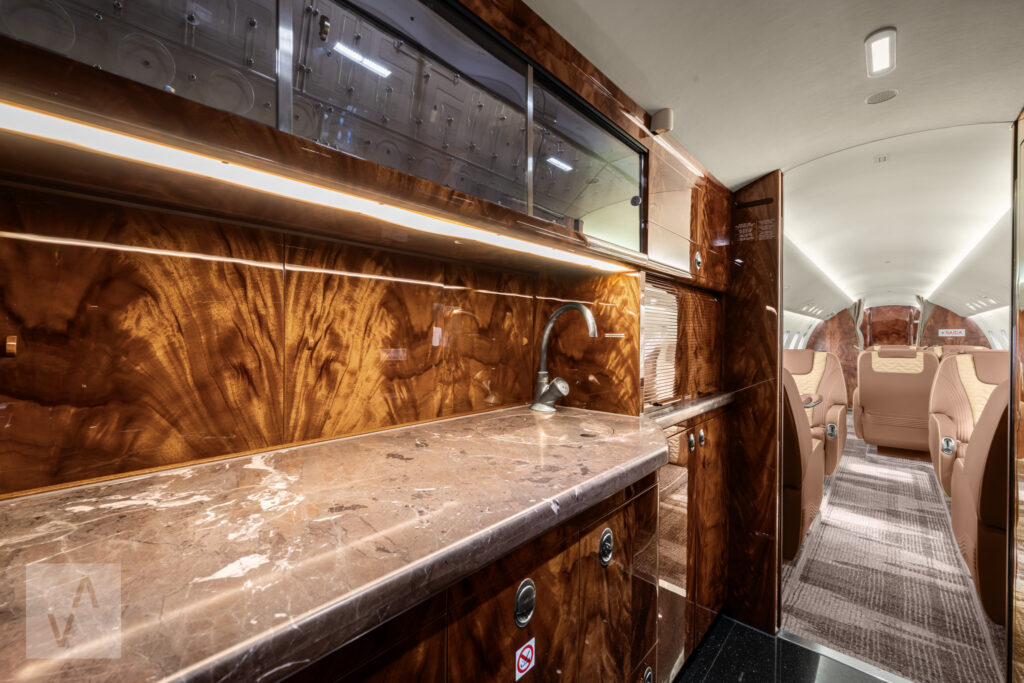
Embraer Legacy 650 — high-gloss and matte finishes combined on a rare mahogany veneer.
