client case

Bombardier Challenger 605

Quiet Confidence, Considered Throughout

use case
Private operations
sales lead
AeroVisto
interior design
AeroVisto
cooperation
ACC Columbia Jet Service / Sparfell
8350_Challenger_605_2605AV_CC

A Palette Rooted in Restraint

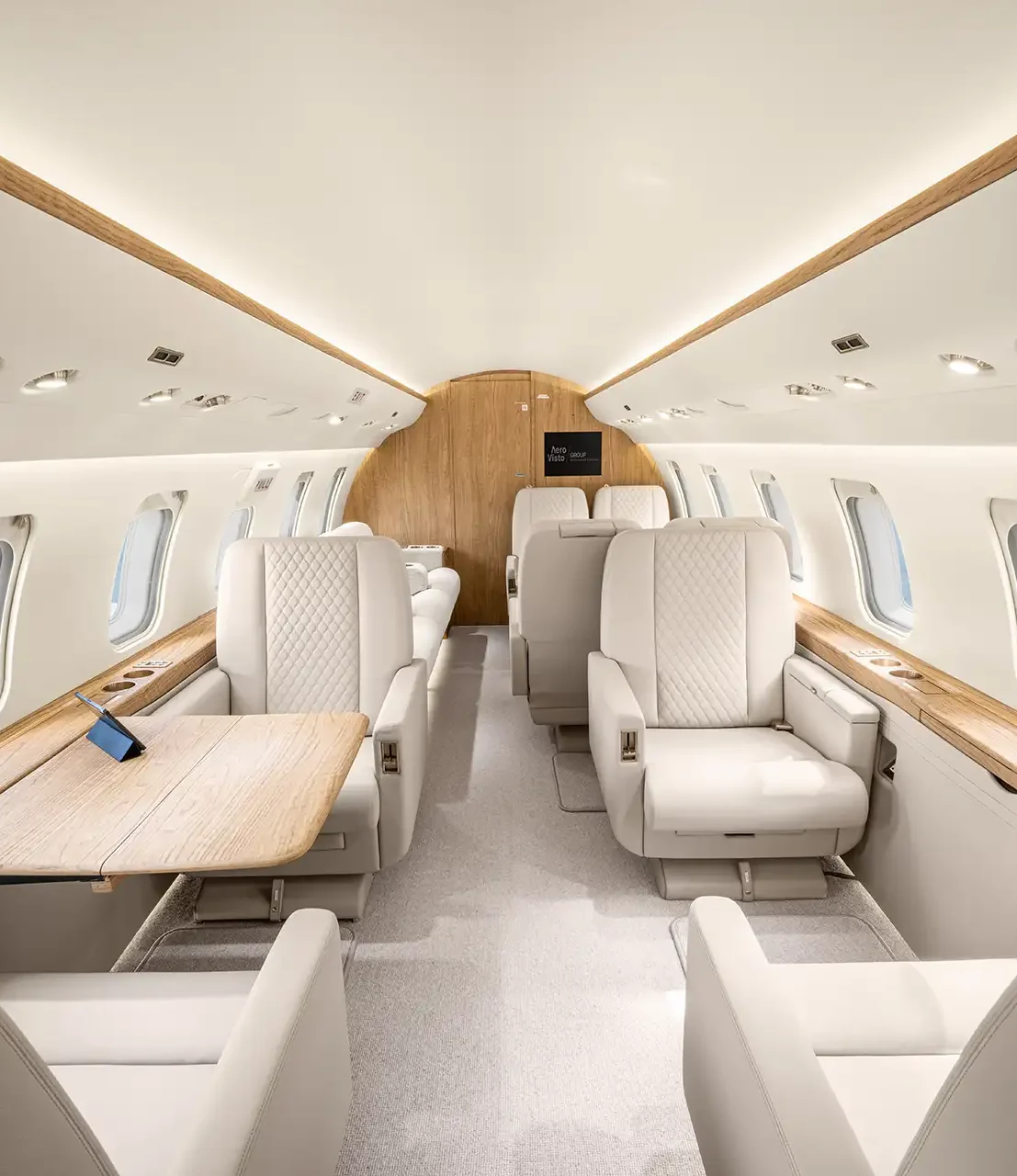
The Bombardier Challenger 605 has earned its place in the super-midsize segment through range, cabin volume, and the kind of quiet reliability that private clients value over time. When a new client took ownership of a 17-year-old example and commissioned AeroVisto to refurbish the interior, the brief arrived with unusual clarity: classical, warm, built for personal use — and deliberately free of anything decorative that did not serve the whole.

Materials were selected in a single session at AeroVisto’s showroom in Staad. The client and his wife flew into St. Gallen — the regional airport sits within sight of the facility — and were at the table within minutes of landing. Both were part of the conversation, and decisions moved quickly: leather, fabric, stone, carpet, decorative film, all committed by the end of the day.

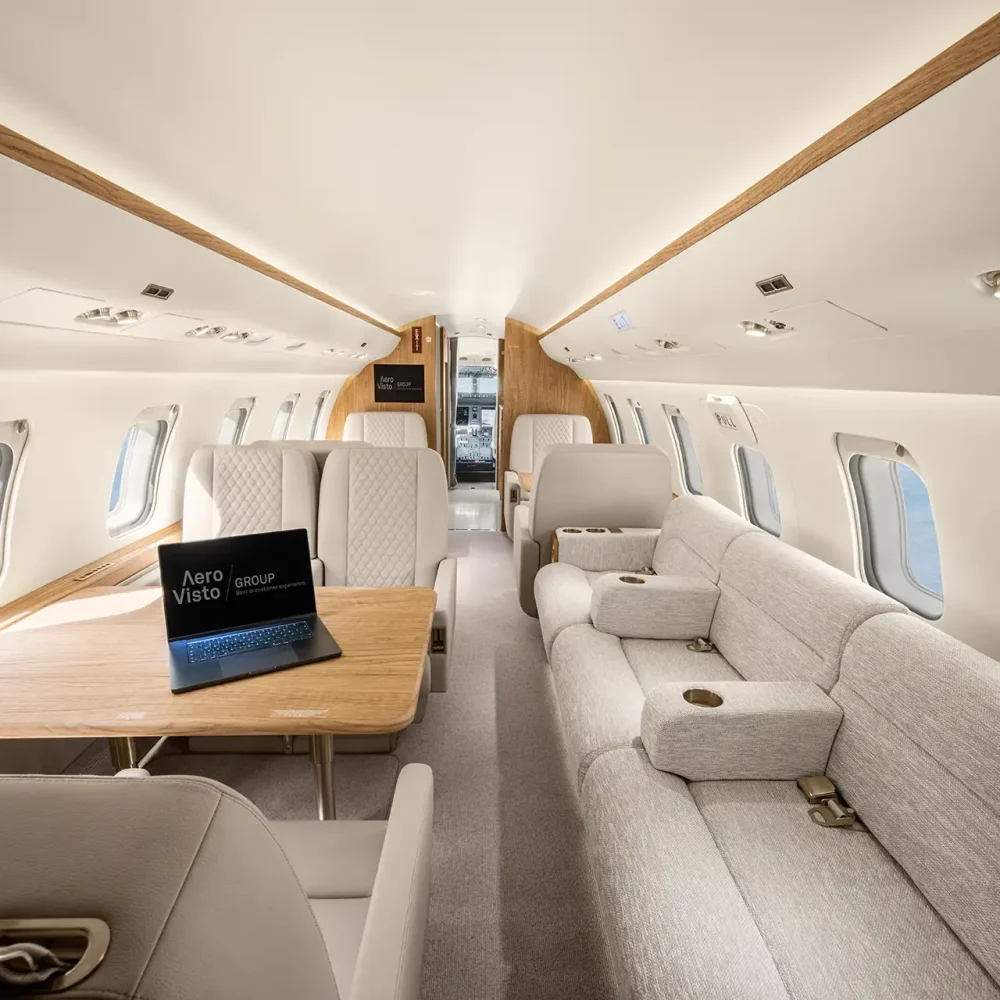
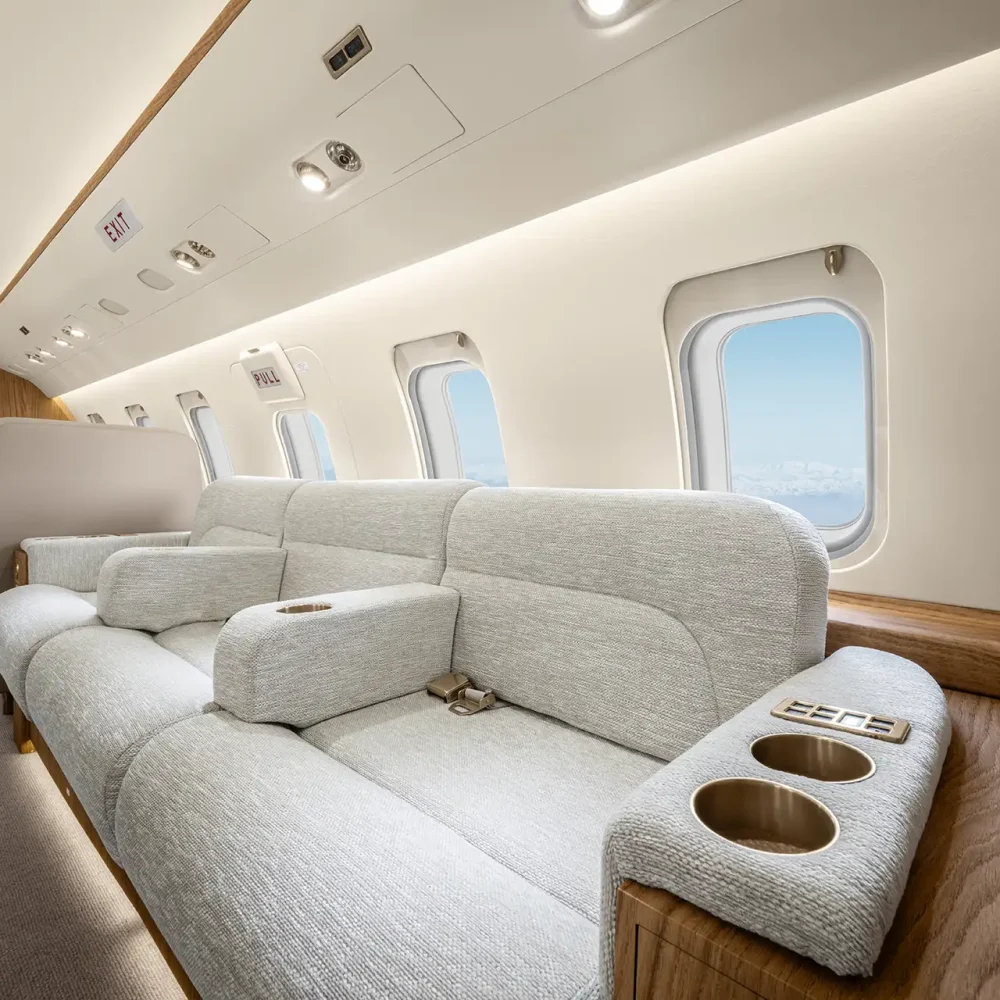
The design took shape with a focus on restraint. The primary surface of the cabin is made of natural-tone leather. A sand-colored fabric on the divan acts as a softer, tactile counterpoint. Warm brown wood grain is used throughout every decorative surface. A lighter looped carpet runs through the main cabin, grounding the space without drawing attention away from the other elements. Together, these choices create a cabin that is meant to settle in quietly—one that maintains its character over the years rather than making a bold statement at first glance.

Where the Detail Sits

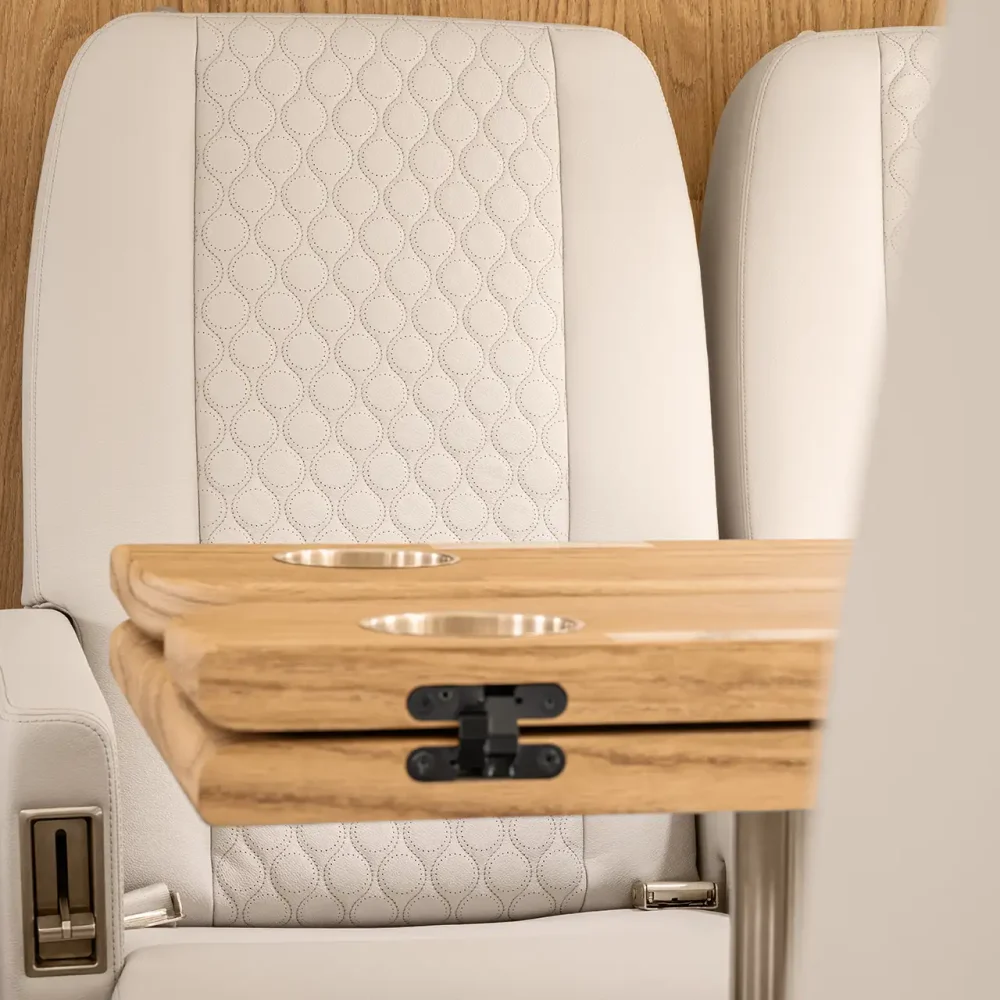
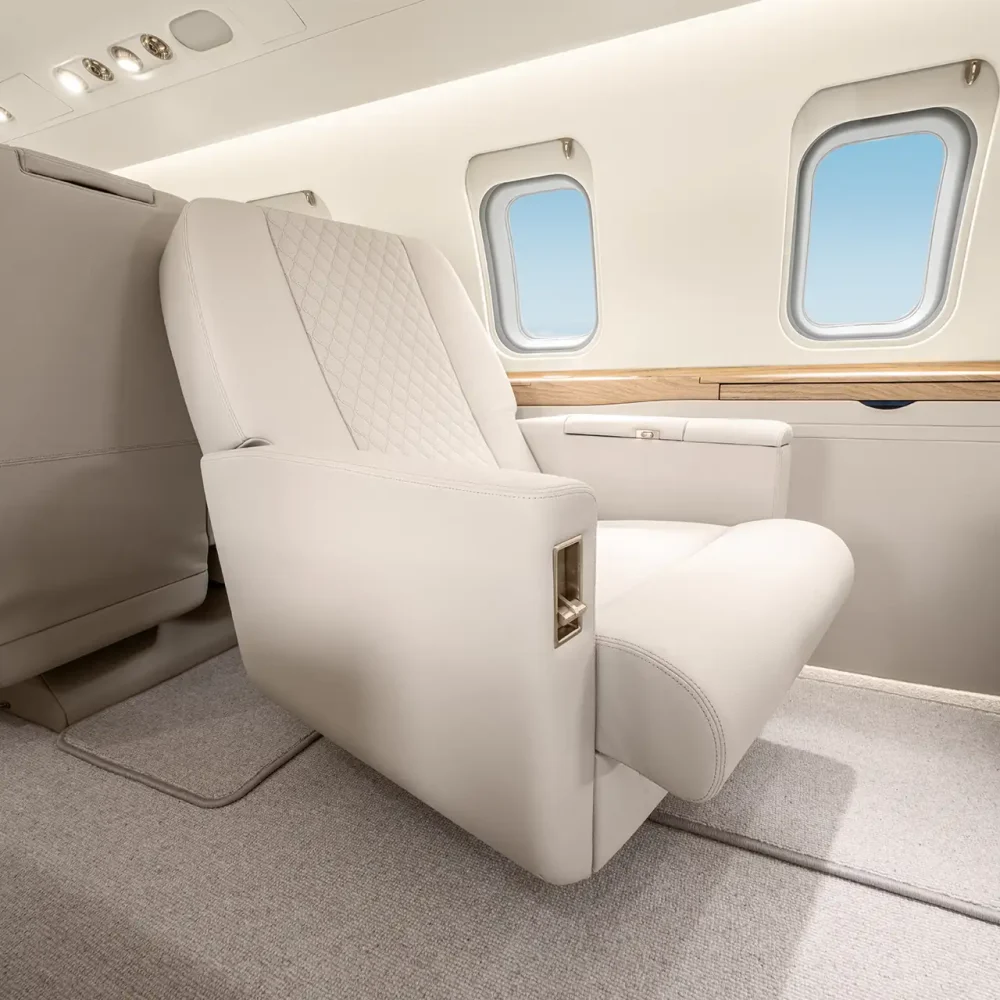
The most deliberate detail sits where passengers sit. A combined perforation-and-stitching pattern runs the full height of every single- and double-seat backrest — center panels only, seat bottoms left plain. Each perforation grid must track cleanly against stitch lines across panels of different geometries, and the saddlery team worked through additional layout passes before committing each panel to leather.

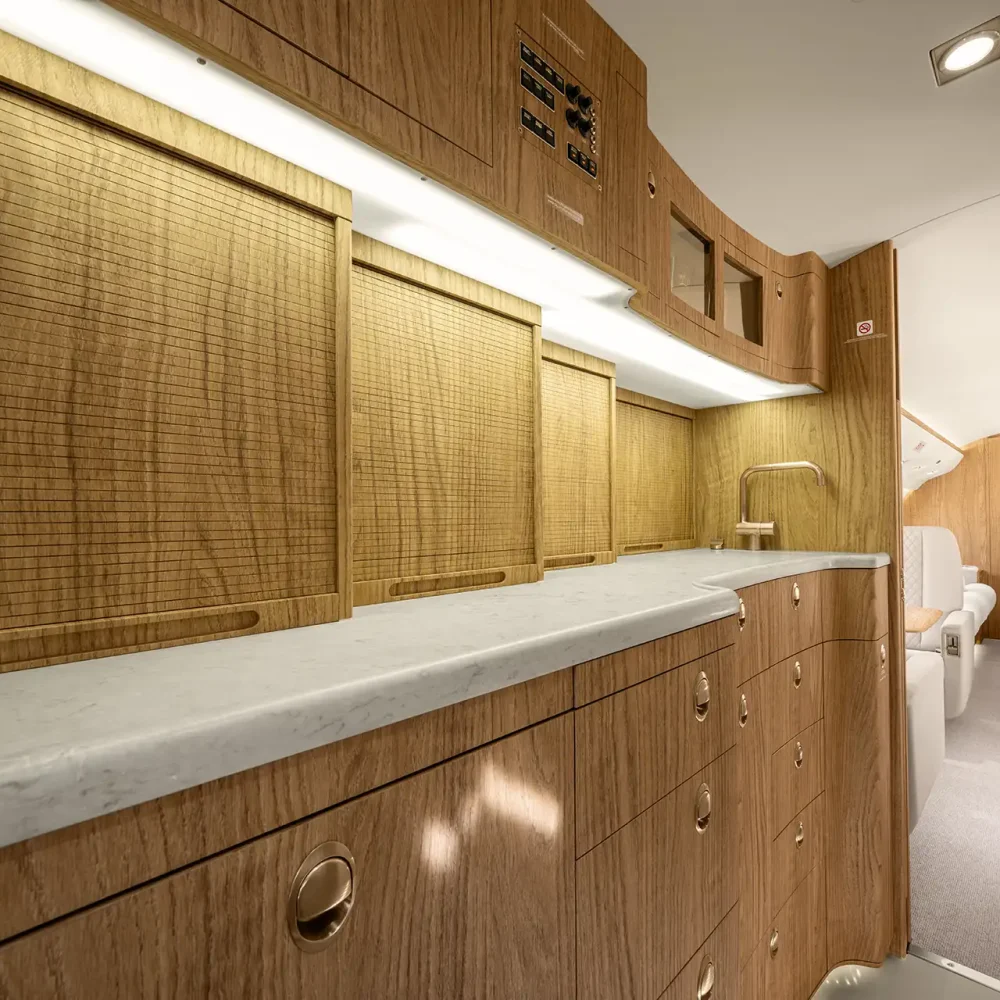
Across the cabin’s wooden surfaces, Decor Film Application in a warm brown tone brought continuity to the material story — including the handrail, where the film was applied as a deliberate accent rather than left untreated.

Stone arrived in stages. Flooring in the entrance and galley was part of the original specification. Countertops in the aft lavatory followed later in the build — a mid-project decision to carry the stone language through every transitional surface rather than stopping short.

The refurbishment extended into every remaining detail. The divan was re-covered in sand-tone fabric with decorative cushions in matching leather. Cockpit seats were refurbished in leather with sheepskin overlays. Lower sidewall panels, the main entrance door curtain, lavatory seat, and jump seat were re-covered in the cabin’s primary leather. Windowliner, valance, and headliner panels followed in ultraleather, color-matched to the window shades. Seatbelts were re-webbed in a coordinating tone.

8533_Challenger_605_2605AV_CC
8287_Challenger_605_2605AV_CC

Hands-On Where It Mattered

Selecting the right stone meant traveling to the source. In the Bavarian Forest, on a late afternoon that tipped into light snowfall, AeroVisto’s sales director, Daniel Heidrich, together with Oliver Stone, the client’s technical representative, reviewed material slabs at the fabricator’s facility. The client joined by video call, reviewing the options on camera until the right tone was agreed. It is a small scene, but it captures how the project ran: hands-on where it mattered, coordinated across distance where it had to be.

Sparfell, the aircraft’s operator, stayed closely involved throughout, coordinating logistics and slot timing alongside the maintenance schedule at ACC Columbia Jet Service in Hannover. When the scope grew mid-project — countertops in the aft lavatory, along with several smaller items that brought the cabin’s classical register into full alignment — the additions were folded into the existing scope. The aim, from the outset, had been a coherent interior — not a sequence of optional extras.

A clear specification from the outset allowed the supply chain to begin sourcing immediately — no revision cycles, no shifting brief. From there, transparent communication between AeroVisto, ACC Columbia, Sparfell, and the client’s technical representative kept the build on timeline through to delivery.


Recommended and Aligned

ACC Columbia Jet Service held the airframe maintenance on this Challenger 605 and recommended AeroVisto for the cabin work. From there, the two organizations ran on a shared timeline — maintenance and refurbishment milestones aligned, with mutual visibility on each other’s readiness dates.

Location mattered to the client as well. The Swiss base made the in-person material selection straightforward to arrange — a detail that carried more weight than logistics alone. A direct working culture, samples on the table, decisions made in the room, was part of what the client had been looking for. That directness carried through the rest of the project — in regular updates, in scope decisions taken jointly, and in a build that stayed on schedule.

8386_Challenger_605_2605AV_CC
Before
After
8446_Challenger_605_2605AV_CC

Built to Brief, Built to Last

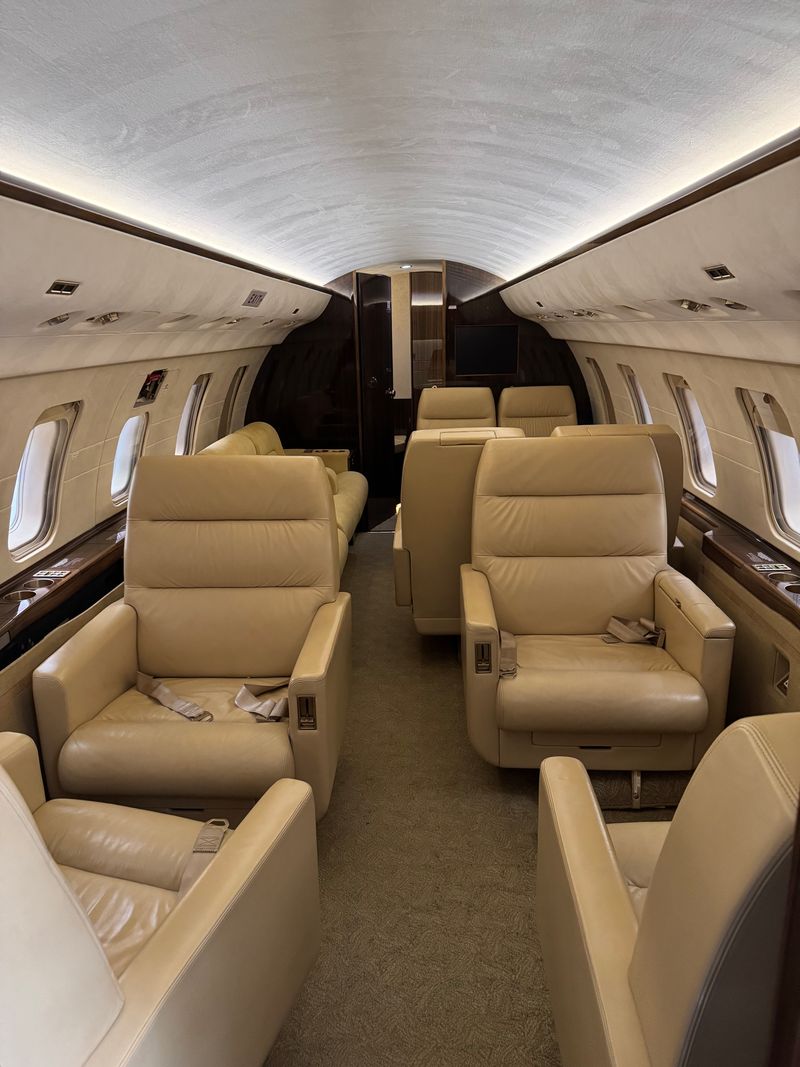
The cabin reads as it was briefed. Across leather, fabric, the wood-grain surfaces, and the stone in the entry and aft lavatory, a single register holds — warm, classical, fully resolved. On the seating, the signature stitching gives the cabin a quiet sense of detail without unsettling the calm of the wider palette.

The photographer who documented the completed aircraft described it as one of the most considered refurbishments he had worked on. The team’s own reading is consistent with that view.

That coherence is not accidental. It traces back to how the project was set up — a clear brief, consistent decisions, and transparent communication held from the first meeting through to installation. When planning and communication align from the start, the result carries that clarity through to the finished cabin.

For AeroVisto, the longer signal arrived after handover. The client is already in conversation about a further project — a second aircraft in his fleet, built around the same material language established here. A returning client is the clearest measure of a cabin done right.

Scope of work

virtual tour

more client cases

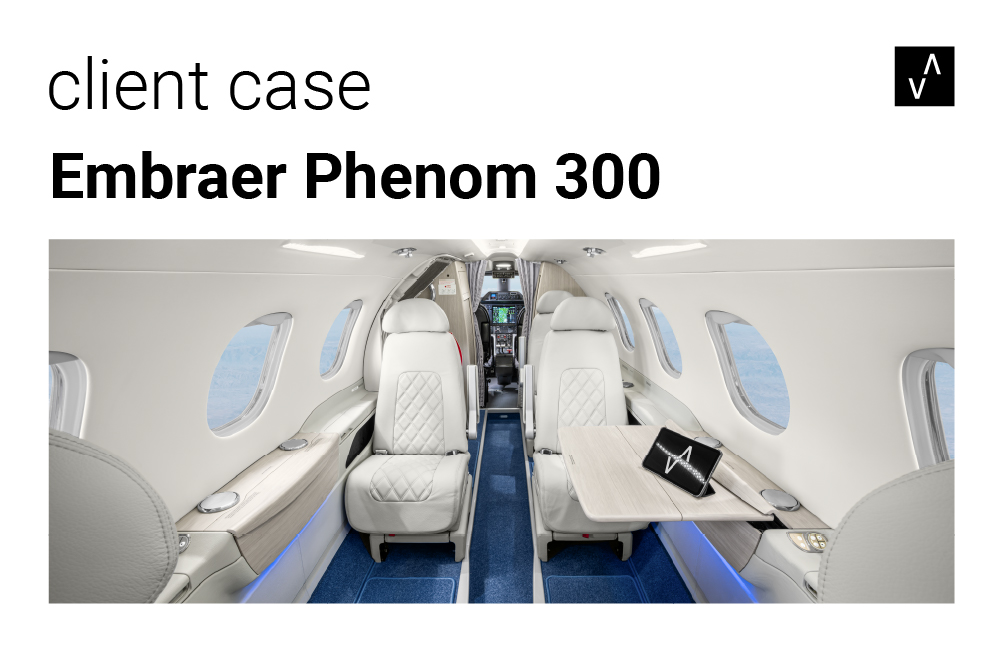
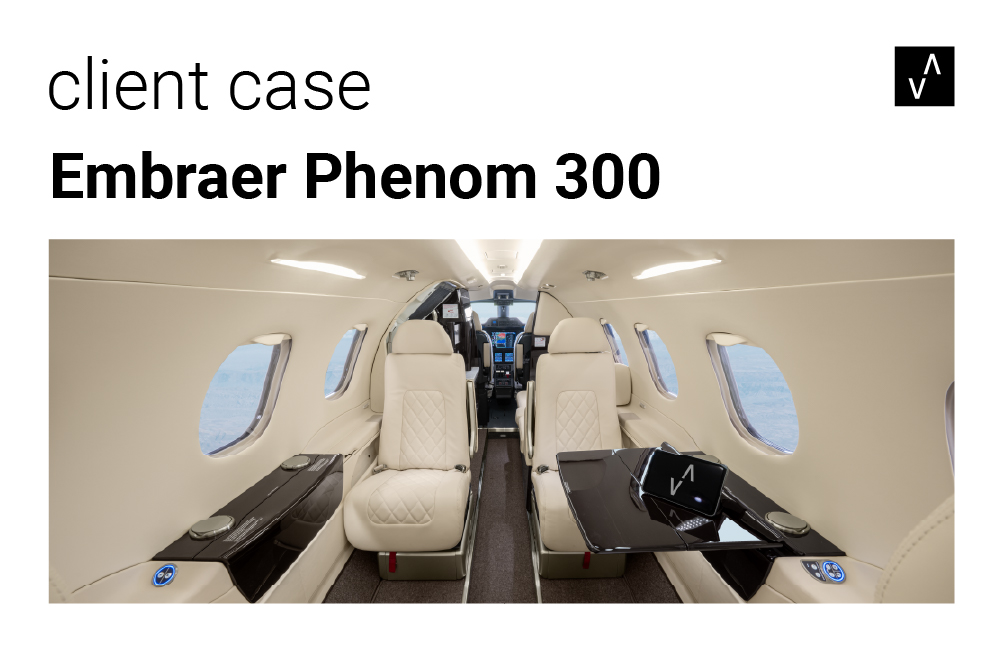
Client Case: Embraer Phenom 300

This Embraer Phenom 300 design features three signatures. Leather with Stay-Clean-Technology covers the cabin seating, chosen to maintain its appearance under frequent passenger use. The wooden elements carry Decor Film Application, robust where daily service demands it.
Read more »

Client Case: Embraer Legacy 500

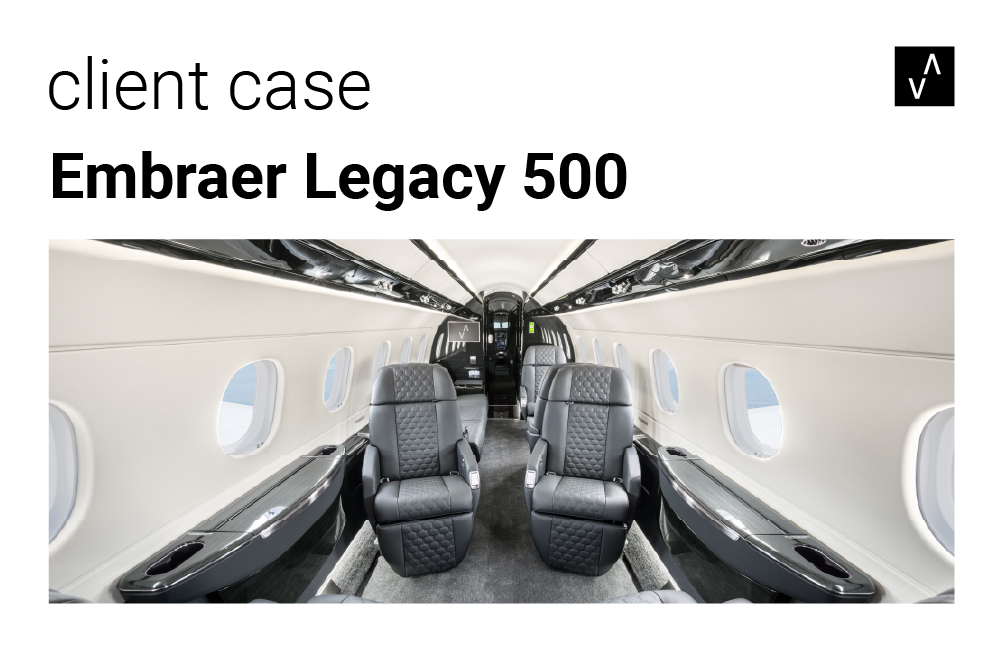
The Embraer Legacy 500 belongs to the current generation of business-jet cabins — interiors with more complex geometries, more individual components, and more of the cabin lined and trimmed than earlier designs.
Read more »
Embraer Phenom 300, AeroVisto, Aircraft Refurbishment

Client Case: Embraer Phenom 300

The owner of this Phenom 300 approached us with a decision that turned a maintenance event into something larger: use the downtime for a complete refurbishment — maintenance, cabin, and exterior, all at once.

Read more »

Client Case: Boeing Business Jet

The Boeing Business Jet sits at the top of the business-aviation cabin — a Boeing 737 turned private aircraft, with the floor space of an airliner and the finish of a private jet.

Read more »